
June 19, 2026
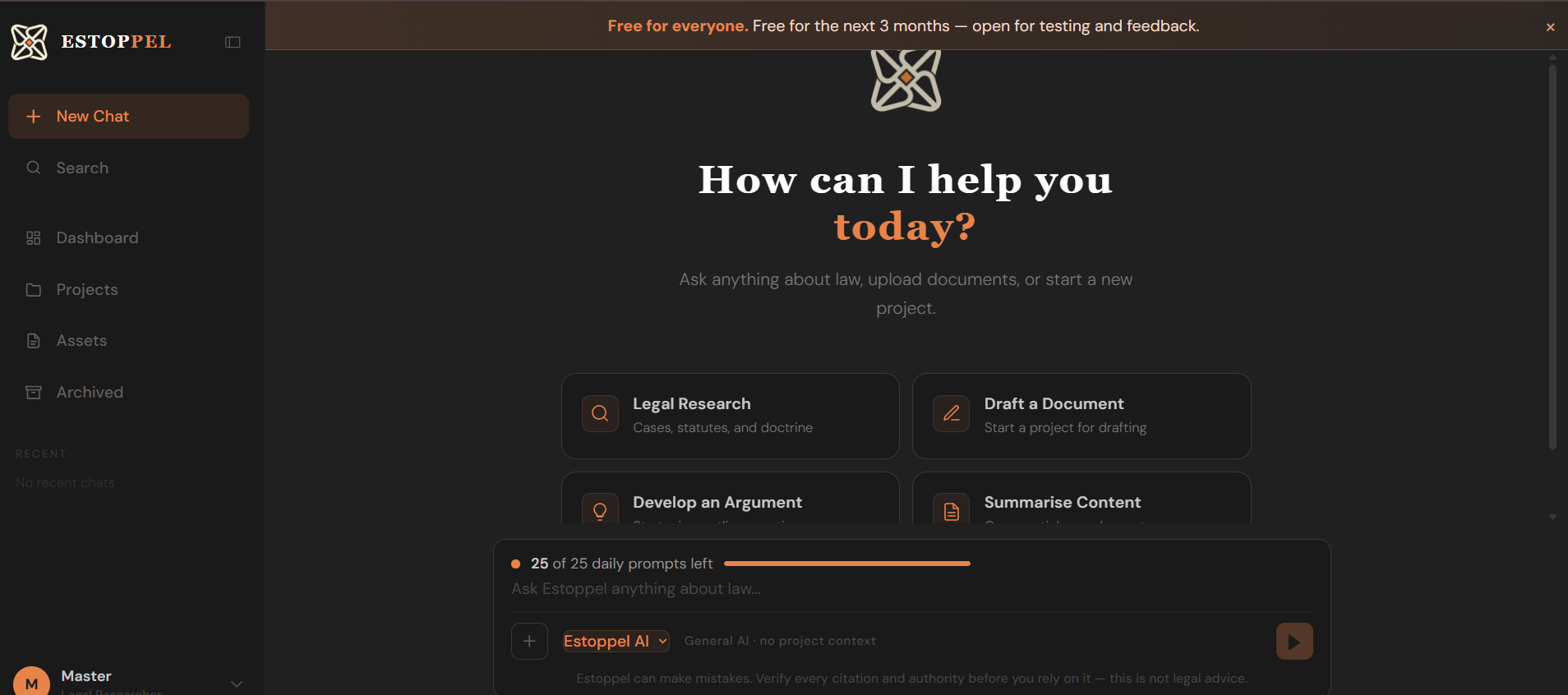
It is easy to describe an AI product in adjectives. It is harder, and more useful, to walk through what actually happens when you use it. So this is a tour of Estoppel as a working tool — what you see, what it does, and why each piece is there. The short version is that Estoppel is built to be a single workspace for an entire matter, rather than a collection of clever one-off answers. The longer version is below, more or less in the order you would meet it.
It begins, sensibly, by getting to know you. The first time you sign in, Estoppel walks you through a short onboarding rather than dropping you into an empty screen and wishing you luck. It is a small thing, but it sets the tone: this is a workspace meant to be set up around how you actually work.
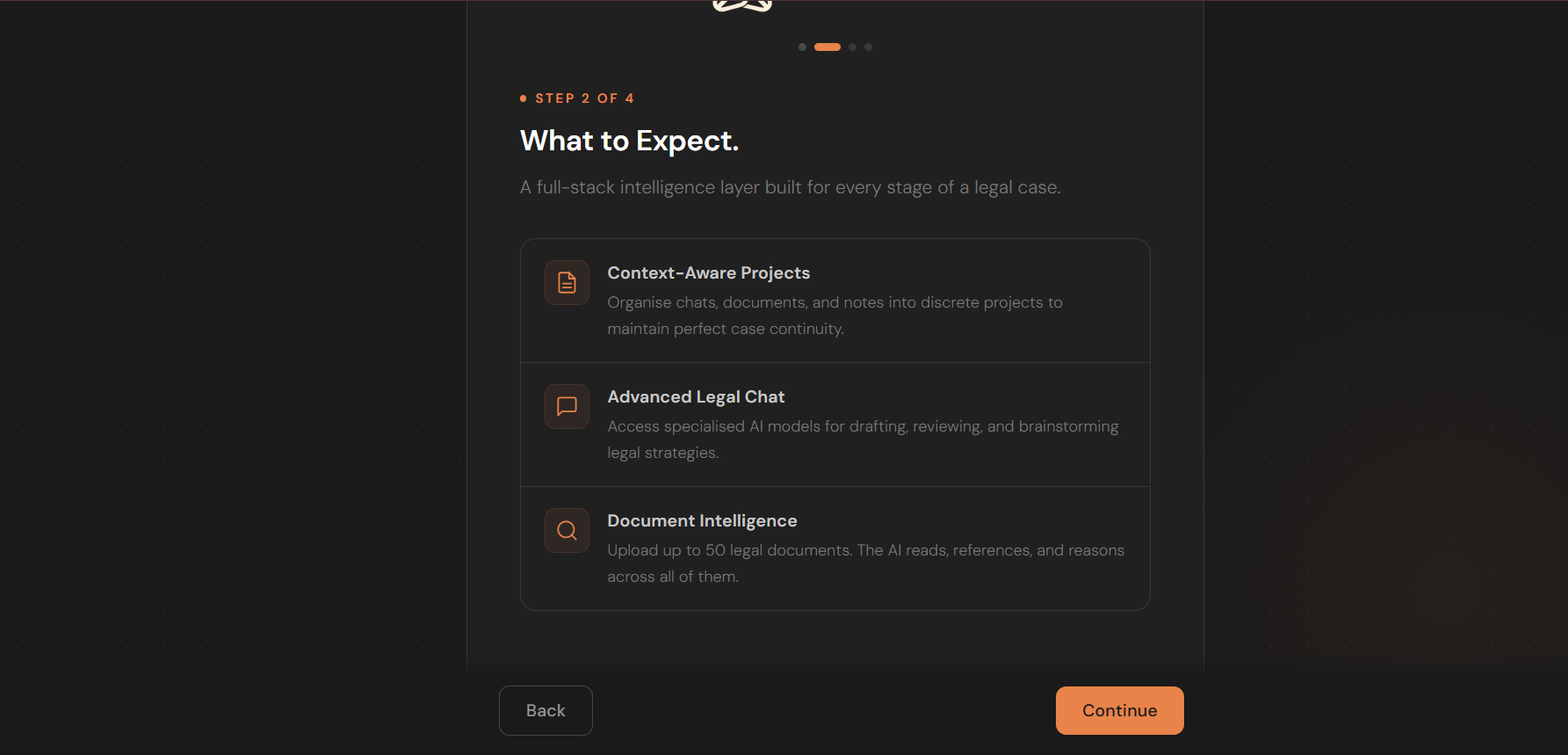
From there it tells you, honestly, what to expect. Estoppel describes itself as a full-stack intelligence layer for every stage of a legal case, and the three pillars it introduces are the three things it genuinely does well: context-aware projects that keep chats, documents and notes organised around a single matter; an advanced legal chat with specialised models for drafting, reviewing and thinking through strategy; and document intelligence that can ingest up to fifty legal documents and then read, reference and reason across all of them at once.
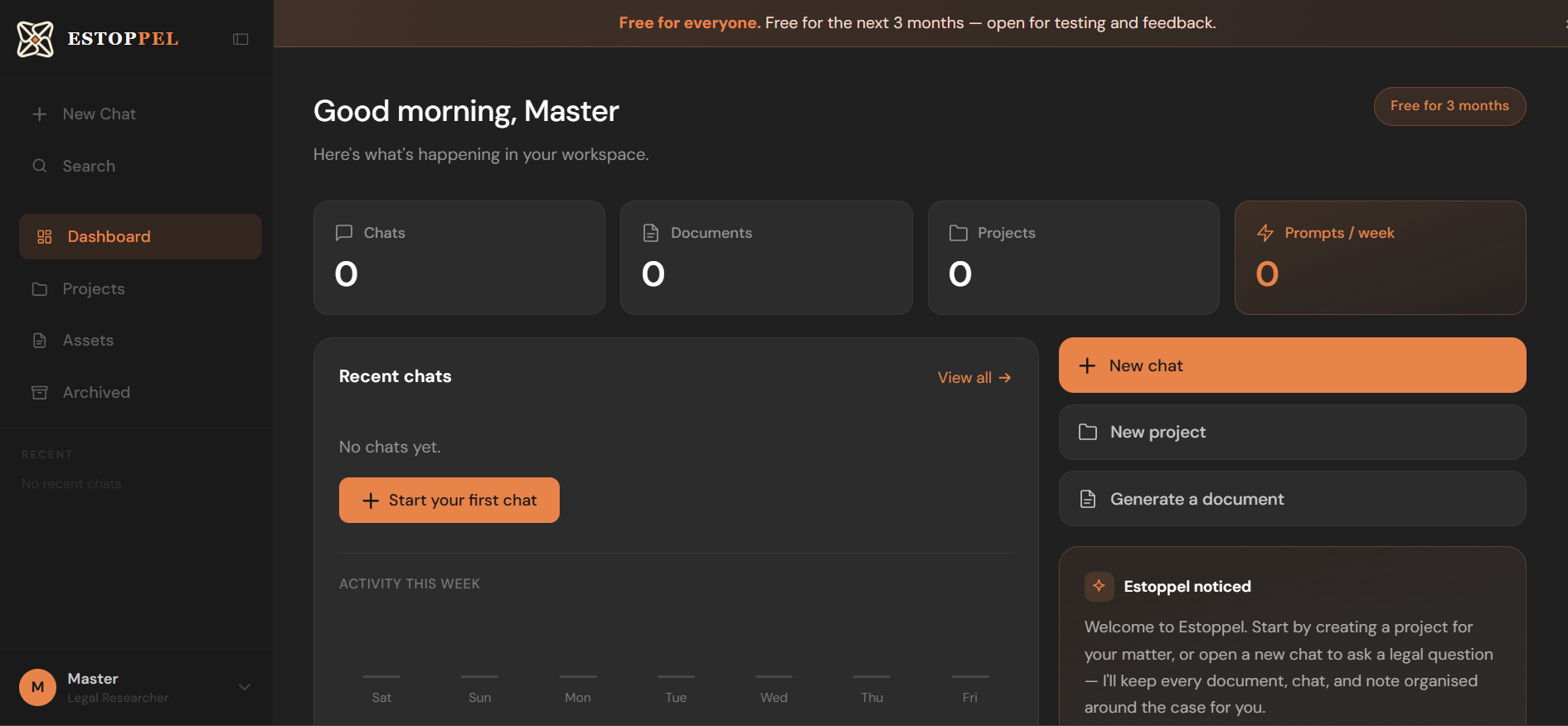
Once you are in, the dashboard becomes home base. It is deliberately calm — a clear view of your chats, documents, projects and recent activity, with the most common next actions one click away: start a new chat, open a new project, or generate a document. The point of the dashboard is not to dazzle you; it is to make the next useful thing obvious. Everything you have done in the workspace lives here, organised, so that picking up a matter feels like returning to a desk rather than rebuilding from memory.
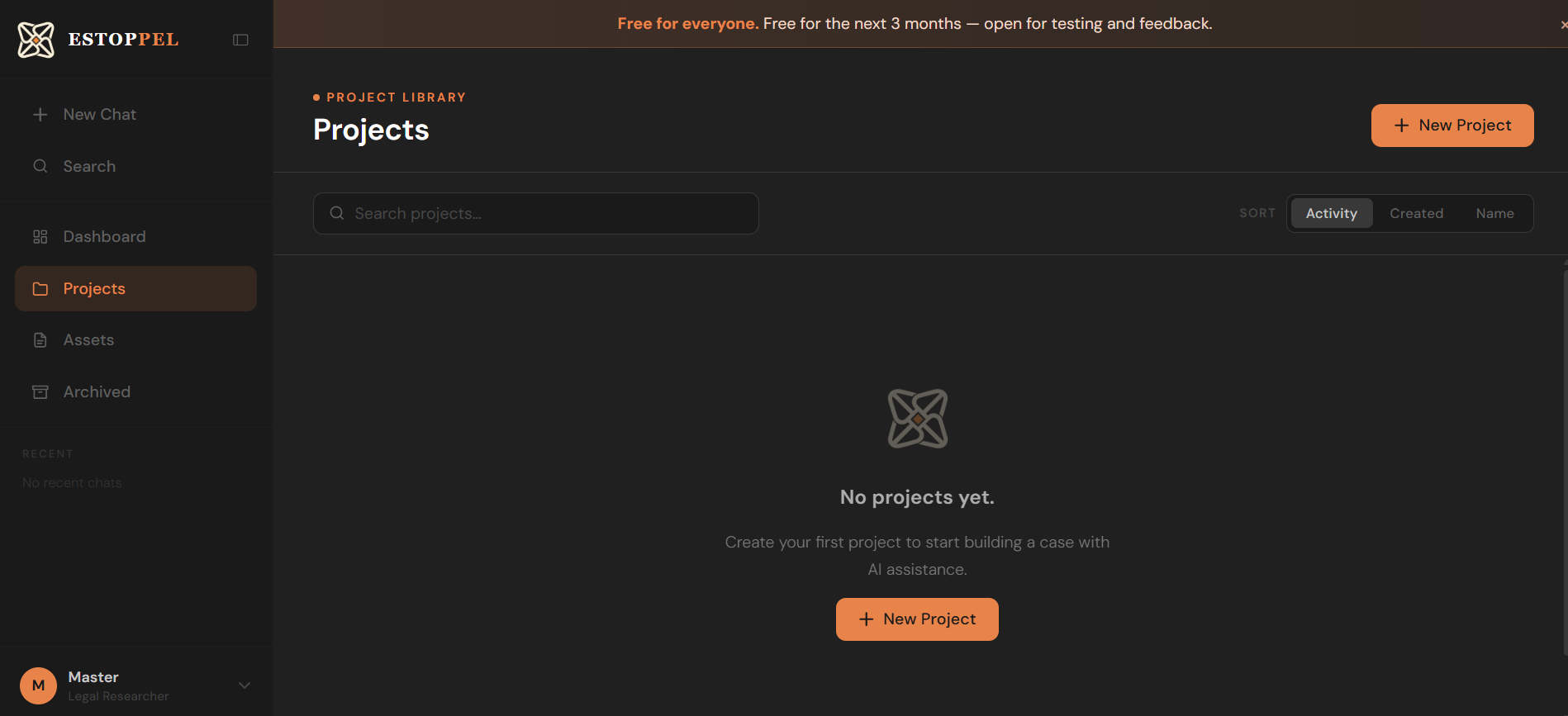
Projects are what turn all of that from a series of clever answers into an actual case file. A project gathers the chats, the uploaded evidence and the notes for a single matter and keeps them together, so the workspace's understanding of your case deepens over time instead of resetting. When a matter has its own project, every document you have added becomes context the AI can draw on, and every draft you produce has somewhere to live.
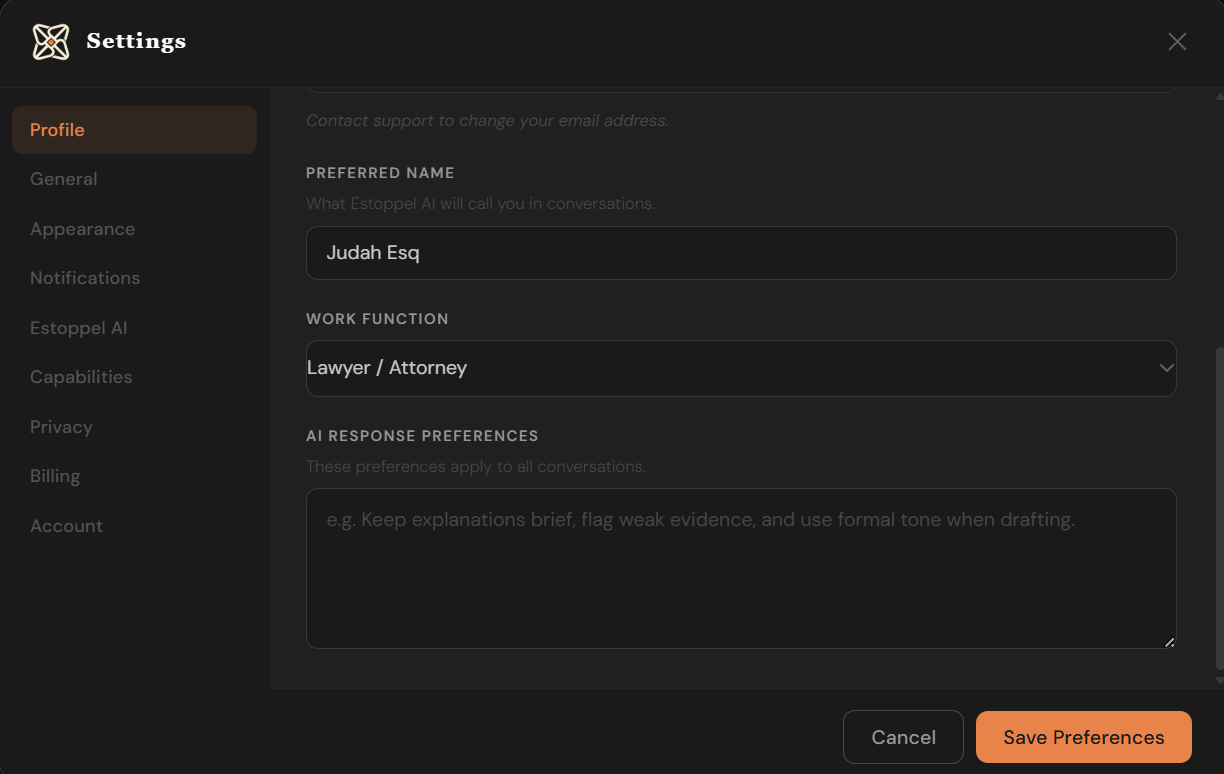
A tool you use every day should fit you, not the other way around — and this is where Estoppel quietly goes further than most. The settings let you tell the AI who you are and how you want to be spoken to: a preferred name, your work function, and free-text response preferences that apply to every conversation, so you are not re-explaining your style on every prompt.
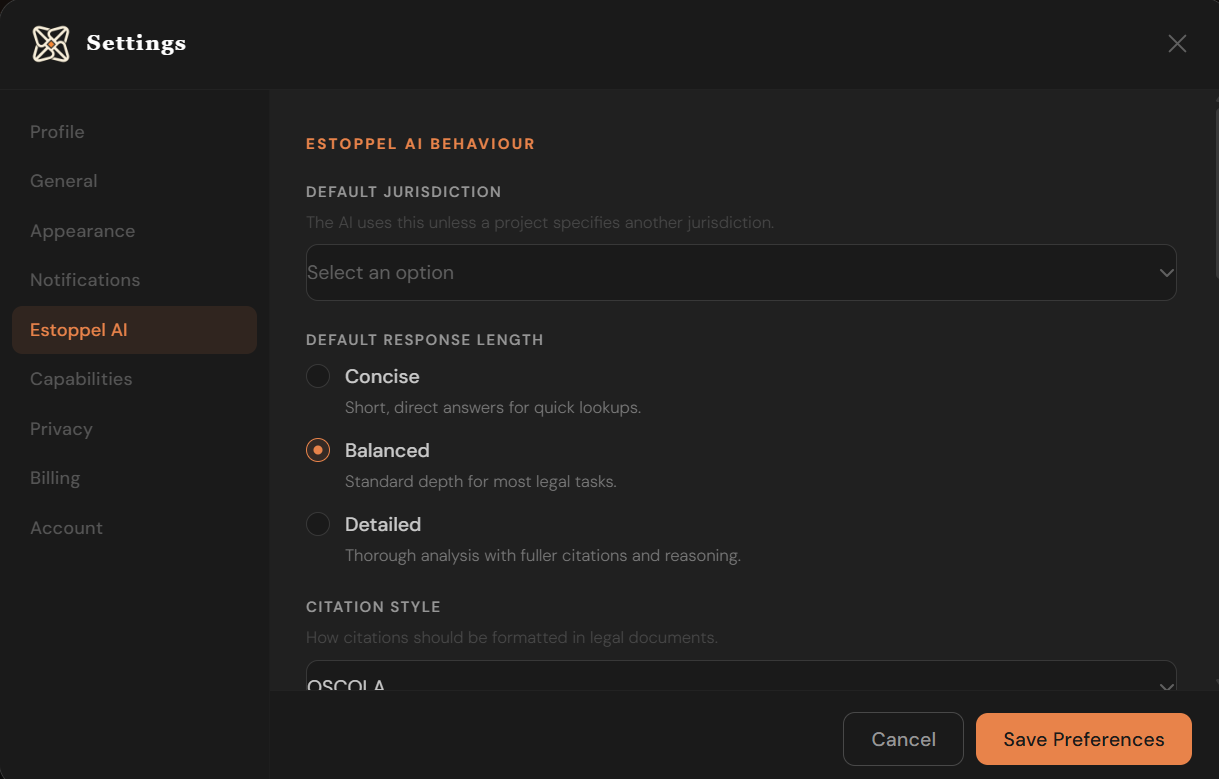
You can also tune how the AI behaves at the level that matters in legal work — a default jurisdiction, how long or detailed answers should be, and the citation style your documents should follow. These are not cosmetic toggles; they shape the substance and form of what Estoppel produces.
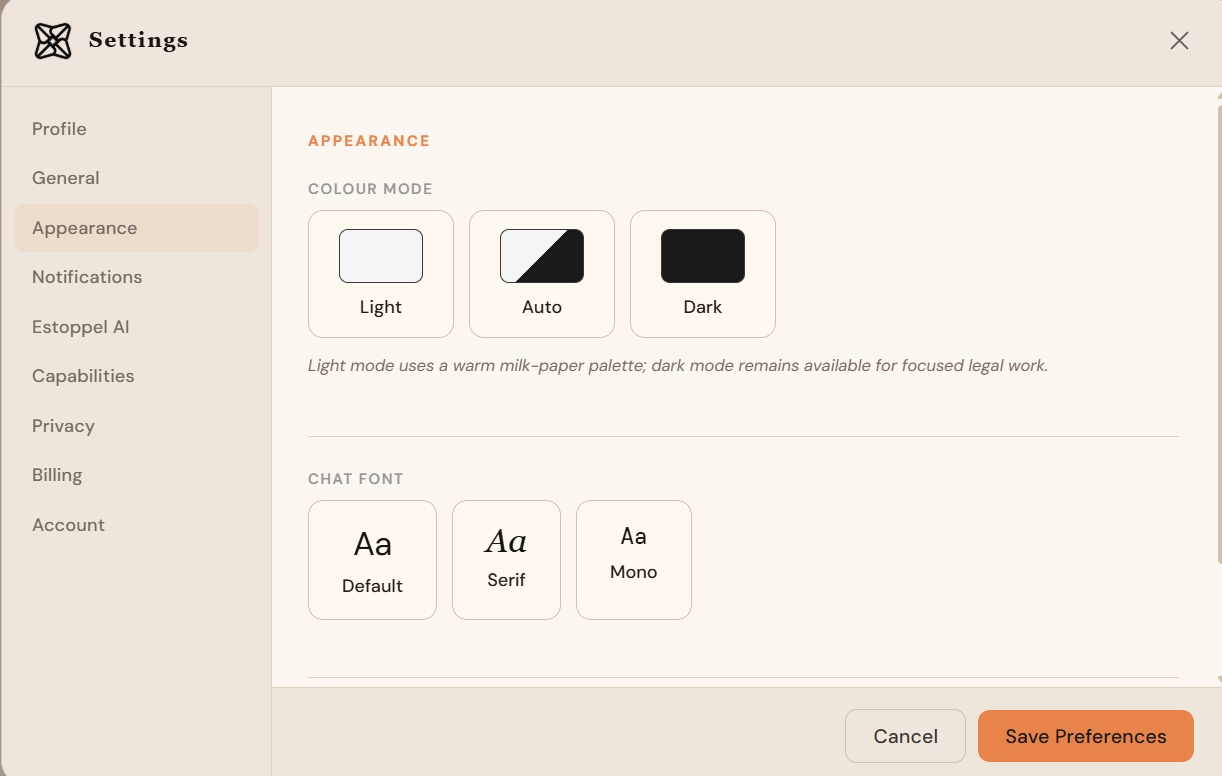
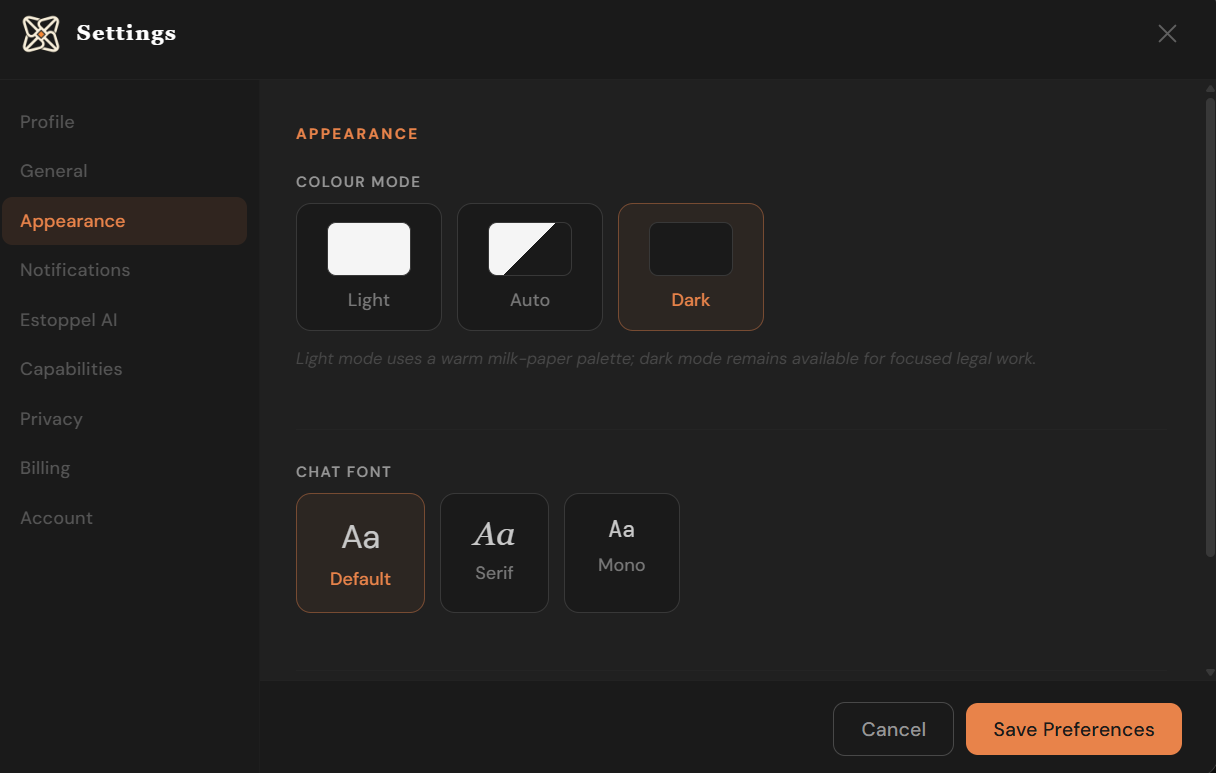
And because legal work happens at all hours and in every kind of room, Estoppel ships with a considered light and dark theme — a warm, milk-paper palette for daytime reading and a focused dark mode for long, late drafting sessions. It is the same workspace, dressed for whichever way you work.
When the thinking is done, Estoppel produces something you can actually use. It does not just hand back text in a chat window; it generates finished documents — memoranda, briefs, affidavits, opinions, contracts, presentations and schedules — and exports them as real Word, PDF, PowerPoint and Excel files, formatted for legal work. That last mile is where a lot of AI tools quietly give up, leaving you to reformat everything by hand. Estoppel treats the export as part of the job, because for a practitioner it is.
None of these features exist for their own sake. Onboarding, dashboard, projects, deep personalisation, themes and one-click drafting are all in service of a single idea: that a legal professional should be able to open one workspace at the start of a matter and stay there, shaped to fit exactly how they work, until the work is finished. That is what Estoppel is. The rest is detail — important detail, but detail.